
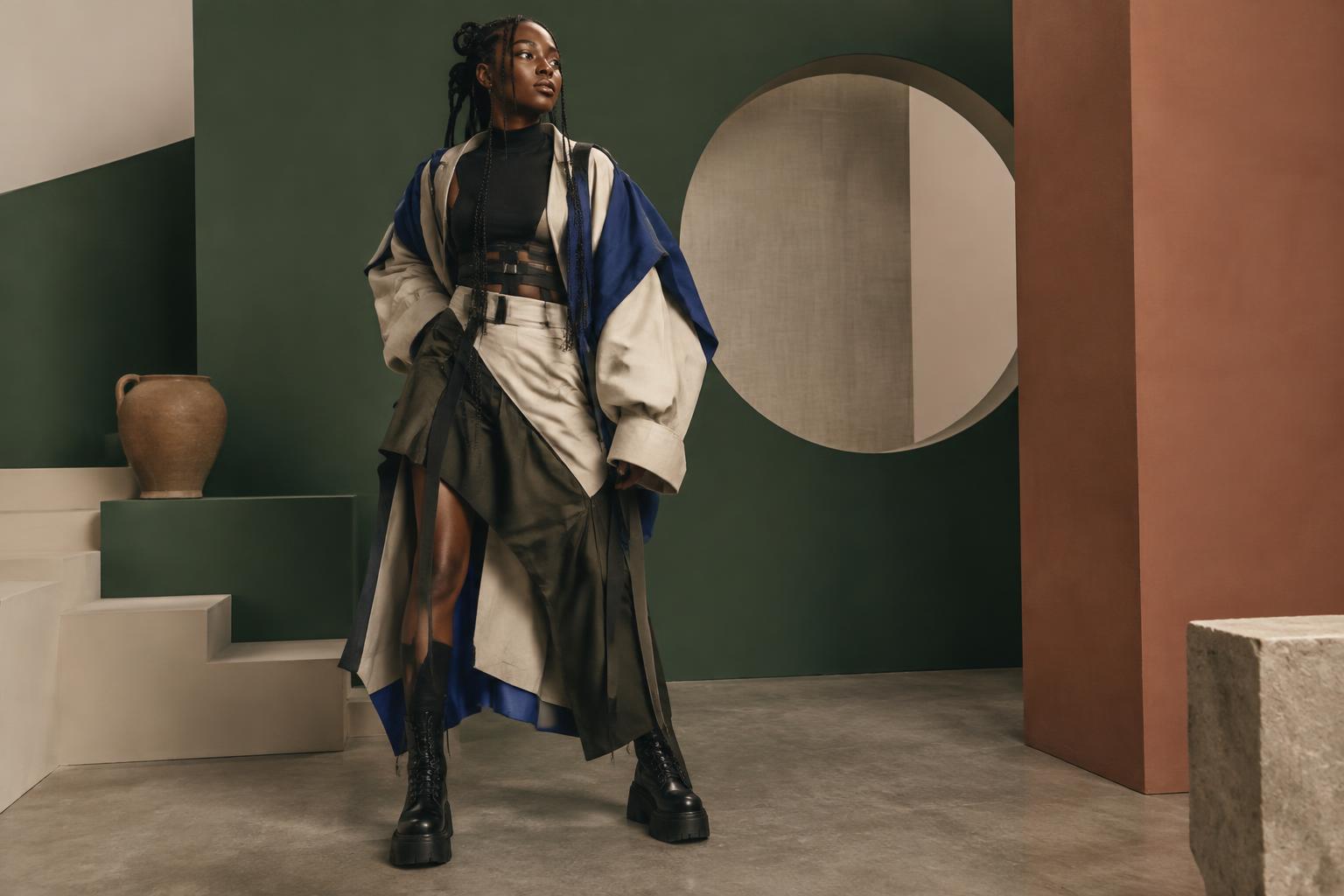
Season One · Applications opening soon
Anime
Fashion
What happens when people stop dressing as characters and begin using anime to explore their own character?
Season One is where identity becomes visible: real people, real wardrobes, and the slow work of dressing like who they are becoming.
Applications open in
- Applications open
- 12 October 2026
- Applications close
- 31 October 2026
- Cast revealed
- Date to be announced
- Season begins
- Date to be announced
What this season is
Not cosplay.
Character.
Season One follows a small cast of real people through ten stages, from Application to the Final Ceremony. Nobody is given a costume. Nobody is asked to reproduce a character. Every outfit is built from clothing the contestant already owns or genuinely chooses for themselves.
Anime enters as a language rather than a look. Characters are designed to be read instantly — silhouette, colour and posture carry meaning before anyone speaks. That clarity turns out to be a useful way of describing something most people find hard to say directly: how they want to be understood.
Season One is a creative competition. There are challenges, judging criteria and a result. What it is not is a makeover or a psychological assessment — the BTDRE layer underneath the season is reflective, and it never reduces a person to a number.
- Transformation
- Character development
- Personal archetypes
- Emotional expression
- Identity
- Power
- Vulnerability
- World-building
- Becoming
From application to season
Six steps between reading this and taking part.
- 01
Create an account
A BTDRE account holds your application, saves progress and later becomes your season dashboard.
- 02
Answer the application questions
Written in your own words: presence, purpose, wardrobe reality and personal rules.
- 03
Submit outfits and a short video
Real outfits from your own wardrobe, plus one short video so the team can hear how you talk about them.
- 04
Review and Selection
Every application is read by people. Selection is a human decision, made by the BTDRE team.
- 05
Conversation
Shortlisted applicants are invited to a conversation before any final decision is made.
- 06
Season One
Selected contestants move through the season's stages with support from the BTDRE team.
What the team looks for
There is no ideal candidate. There are things that make a season work.
Self-awareness over polish
A clear, honest account of who you are matters more than a well-produced application.
Willingness to be seen mid-change
The season documents a transition. It works best with people who are genuinely inside one.
A real relationship with your wardrobe
Not a large wardrobe. A considered one — including the parts that frustrate you.
Curiosity about anime as language
Interest in what characters express, not in reproducing what they wear.
Care for other contestants
This is not a season built on conflict. The cast makes the season together.
Selection is made by the BTDRE team. No automated system decides who takes part.
The Style Portrait
Everything begins with a written self.
Before anything is styled, every contestant builds a Style Portrait. It is the reference point the whole season is read against — not a score, and never shown as one.
Presence today
How the contestant experiences themselves right now: energy, mood, what they are carrying into the season.
The self they are becoming
The version of themselves they are moving toward, in their own words rather than in aspirational language borrowed from elsewhere.
Wardrobe reality
What they actually own and actually wear, including the pieces that never leave the wardrobe and why.
Environments that matter
The rooms, cities and relationships their clothing has to work inside.
Personal rules
The things they have decided they do or do not wear — the material Outside My Usual World eventually questions.
What alignment would feel like
Their own definition of an outfit that supports them, written before the season can influence it.
The season · Ten stages
Ten stages, asked one at a time.
Application
“How do you already understand yourself?”
The premise
Anyone can apply. The application is written in your own words, using your own wardrobe — nothing is bought or borrowed for it.
What happens
Applicants create an account, answer a short set of questions about presence, purpose and wardrobe reality, and submit real outfits.
What is noticed
Honesty and self-awareness, not production value.
Review and Selection
“Who is genuinely inside a change right now?”
The premise
Every application is read by people. Selection is a human decision made by the BTDRE team.
What happens
Applications are reviewed, shortlisted applicants are invited to a conversation, and a small cast is selected.
What is noticed
Willingness to be seen mid-process, and care for the other people in the season.
The Style Portrait
“Where are you starting from?”
The premise
Before anything is styled, each contestant builds a written portrait of how they currently understand and present themselves.
What happens
Presence today, the self they are becoming, wardrobe reality, environments that matter, personal rules, and their own definition of alignment.
What is noticed
The reference point the rest of the season is read against — never a score.
This Is Me
“Who are you before the season touches anything?”
The premise
Contestants present themselves as they already are, in clothes they already own.
What happens
An ordinary day is documented honestly, including the moment they stopped thinking about what they were wearing.
What is noticed
The distance between the wardrobe someone owns and the identity they describe.
Anime Through My Wardrobe
“What does an anime character give you permission to try?”
The premise
Anime enters as a language for expression — presence and intention, not costume.
What happens
Each contestant builds a look that borrows a character's intention while remaining unmistakably their own. Reference, not replication.
What is noticed
How an external influence is translated into a personal choice instead of copied.
The Style Lens
“What patterns are already visible in your choices?”
The premise
A reflection stage. The Style Lens reads what a contestant wrote, wore and noticed, and describes the patterns it can see.
What happens
Contestants receive written reflections in their own language, which they are free to accept, correct or reject.
What is noticed
Nothing is scored here. The Style Lens does not contribute to the competition result.
Outside My Usual World
“What have you decided you are not?”
The premise
Contestants deliberately work against a rule they have made about themselves.
What happens
One personal rule — a colour, a silhouette, a level of visibility — is set aside, and the experience is documented honestly, including the discomfort.
What is noticed
Which self-descriptions are genuine and which are habit wearing the language of identity.
Through My Eyes
“What becomes visible when intention and interpretation sit side by side?”
The premise
An episode about perception: my eyes, my expression, your eyes, reflection.
What happens
Contestants express how they currently see themselves and record their intention privately. Observers describe what they notice before hearing it, then both are compared.
What is noticed
The gap between intention and perception — not anyone's “true personality”. The contestant keeps the final word.
The Real-World Test
“Does the choice still hold when the room changes?”
The premise
Contestants carry what they have experienced and noticed into a real environment they do not control.
What happens
They dress for a real setting with real people in it, then separate what they intended from what actually happened.
What is noticed
Whether expression adapts to an environment, disappears in it, or negotiates with it.
Final Ceremony
“What became visible?”
The premise
Season One closes with a live ceremony where every contestant presents their work in their own words.
What happens
Each contestant's work is introduced by the reasoning behind it, with the full arc — Style Portrait to final presentation — visible to the audience.
What is noticed
The full arc, presented — alongside the season's competition result.
How the competition is judged
70% creative expression.
30% BTDRE intentionality.
Two complementary dimensions. Creative excellence is what the competition rewards; the BTDRE layer is what makes it a BTDRE season rather than an ordinary fashion contest.
70%
Creative Expression — Fashion & Anime
How creatively and effectively a contestant uses fashion and anime as an expressive language: the look, the styling decisions, and the craft of building character rather than costume.
30%
BTDRE Intentionality
How consciously a contestant understands and works with the relationship between who they are, what they intend, and how they choose to express it.
- Presence Awareness7%
- Purpose Clarity7%
- Alignment11%
- Reflection & Growth5%
Judging applies to the creative work made inside Season One. The Style Lens contributes to the participant experience and reflection only — it is not part of the official competition score, and BTDRE's reflective method never reduces a person to a number.
The Style Lens
A reflection tool. Never a verdict.
The Style Lens is BTDRE's reflection tool. It reads what a contestant wrote, wore and noticed across the season and describes the patterns it can see.
The Style Lens is a reflection instrument, not a judgement. Every observation it produces is written as a possibility the contestant is free to disagree with.
What it does
- Describes recurring patterns across outfits, environments and reflections.
- Notes where a stated intention and a documented experience appear to diverge.
- Returns the contestant's own language back to them, organised.
- Produces written reflections that a contestant can accept, reject or correct.
What it does not do
- It does not score, rank or rate anyone.
- It does not contribute to the official competition result.
- It does not select, shortlist or eliminate contestants — people do that.
- It does not diagnose personality, psychology or character.
The final show
One night. Every becoming, presented.
Season One closes with the Final Ceremony: every contestant presents their work, in their own words.
Format, venue and broadcast details are still being finalised.
- Each contestant presents the work the season has drawn out of them.
- Each presentation is introduced by the reasoning behind it, not only by its score.
- The audience sees the full arc — the Style Portrait through to the final choice.
- The ceremony presents each contestant's reasoning as well as the season's result.
More than the final image
The work reaches further than the final image.
What contestants keep afterwards is not a wardrobe. It is a way of deciding — a set of questions they can ask themselves in front of any mirror, in any city, for the rest of their lives.
Season One ends. The practice it teaches does not. That is the difference between a show about clothes and a wider exploration of identity.
Applications opening soon
Season One is looking for its cast.
Applications for Season One are opening soon. The full requirements are already published so you can prepare.
Read the application guideSeason signals
We will tell you the moment applications open — and again before they close.